Responsible AI in Higher Education: Balancing Innovation, Security, and Trust
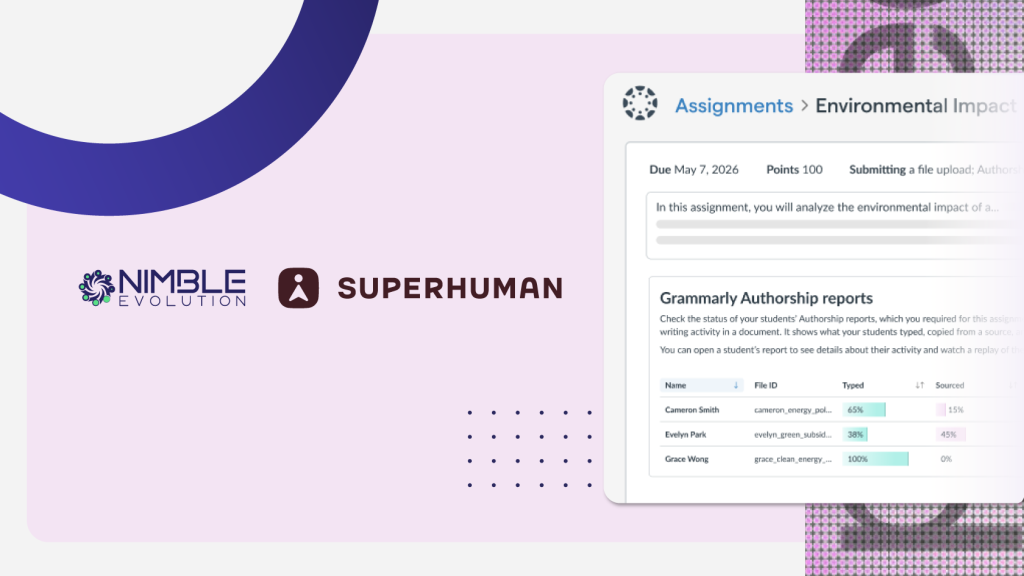
Artificial Intelligence is already transforming higher education. The next challenge is ensuring institutions can adopt it securely, transparently, and in ways that support meaningful educational outcomes.
Artificial Intelligence is changing how students learn, educators teach, and institutions manage their operations.
From AI-powered writing assistants to intelligent agents supporting academic and administrative processes, the opportunities continue to expand.
However, this transformation raises an important question: how can higher education institutions embrace AI innovation while protecting sensitive information, maintaining academic integrity, and building trust across campus?
The answer starts with a responsible AI strategy that brings together technology, governance, and human-centered decision-making.
AI adoption is accelerating. Governance needs to keep up.
AI is no longer an emerging concept in higher education. It is already part of everyday academic activities.
According to Responsible AI in Higher Education: A Prioritization Guide, published by Grammarly, part of Superhuman:
- 57% of students use AI for coursework at least weekly.
- 43% of institutions do not have a formal, campus-wide AI policy.
- 87% of institutions govern AI use at the institutional level.
- Only 13% of institutions measure the ROI of their AI tools.
These findings highlight a growing gap between AI adoption and the institutional structures needed to support it.
For higher education leaders, the priority is no longer simply deciding whether to adopt AI.
It’s about creating clear policies, protecting institutional data, improving visibility, and ensuring technology investments deliver meaningful value.
Three pillars of responsible AI in higher education
Superhuman’s prioritization guide outlines a responsible AI framework built around three essential pillars: security, transparency, and trust.
Together, these principles provide a foundation for effective, ethical, and sustainable AI adoption.
1. Security: Building a reliable foundation
Security is fundamental to responsible AI implementation.
Higher education institutions manage sensitive information across academic, administrative, and operational environments. Introducing AI into these systems requires careful consideration of privacy, data protection, and reliability.
Key priorities include:
- Evaluating AI solutions for security and reliability before implementation.
- Maintaining regular system updates and audits.
- Implementing appropriate access controls and permissions.
- Protecting data through encryption.
- Ensuring compliance with applicable regulations.
A secure foundation helps institutions explore AI innovation while maintaining appropriate safeguards.
2. Transparency: Establishing clear expectations
Responsible AI requires more than technical protection. It also depends on clear expectations about how AI should be used.
Institutions need policies that address academic integrity, ethical practices, accountability, and equitable access.
Recommended actions include:
- Developing transparent AI policies that evolve alongside technology.
- Defining acceptable and ethical AI use.
- Establishing committees to review institutional guidelines.
- Promoting equitable access to AI resources.
- Evaluating potential bias and its impact.
Transparency helps students, educators, and administrative teams understand their responsibilities and make informed decisions about AI use.
3. Trust: Empowering people through AI literacy
Trust develops when AI is implemented responsibly and supports the needs of the people using it.
In higher education, this means equipping students and educators with the skills to understand AI’s opportunities, limitations, and ethical implications.
Institutions can support this objective by promoting AI literacy, encouraging open dialogue, and integrating AI education into academic programs.
It’s equally important to align AI tools with learning objectives and continuously evaluate their effectiveness.
Ultimately, AI should strengthen human capabilities and complement educators, rather than replace them.
Moving from individual AI adoption to institution-wide impact
While AI can improve individual productivity, scaling those benefits across an institution presents additional challenges.
When departments adopt disconnected tools, institutions may face fragmented workflows, inconsistent practices, governance gaps, and limited visibility into AI usage.
A more coordinated approach helps address these issues.
By connecting AI capabilities with existing applications and establishing consistent governance, institutions can move toward a more cohesive strategy.
The goal is to make AI accessible, relevant, and manageable across academic and administrative environments.
How Superhuman Go supports institution-wide AI
Superhuman Go is designed to bring AI assistance into the tools and workflows that students, educators, and staff already use.
Rather than relying exclusively on standalone AI applications, institutions can integrate intelligent support into everyday activities.
Its capabilities include:
In-workflow assistance: AI support is available across existing applications, reducing the need to switch between tools.
Context-aware intelligence: Connections to institutional tools help AI deliver more relevant assistance based on accessible information and permissions.
Custom AI agents: Institutions can develop purpose-built agents to support academic and operational needs, including enrollment, advising, and administrative workflows.
Centralized governance: Institutional controls help organizations manage AI access, security, and policy alignment.
This approach helps institutions move beyond isolated AI experiments toward more connected and governed adoption.
Building a more responsible future for higher education
Artificial Intelligence has the potential to improve learning experiences, support faculty productivity, and modernize institutional operations.
But realizing these benefits requires more than deploying new technology.
Security, transparency, and trust must remain central to the strategy.
By connecting people, processes, and AI capabilities, higher education institutions can build a stronger foundation for sustainable innovation.
Ready to explore responsible AI adoption across your institution?
Discover how Superhuman and Nimble Evolution can help your organization bring AI into everyday workflows while supporting institutional governance and productivity.